
A short sale is a negotiated sale when the proceeds will not cover the mortgage debt and the necessary creditors agree to let the sale close. It can be an option during a Florida foreclosure, but approval and the court timeline must be coordinated. A buyer’s offer does not pause the lawsuit.
If keeping the property is not practical, evaluating a sale early may leave more room to work through approval, title, and closing issues before a scheduled auction limits the options.
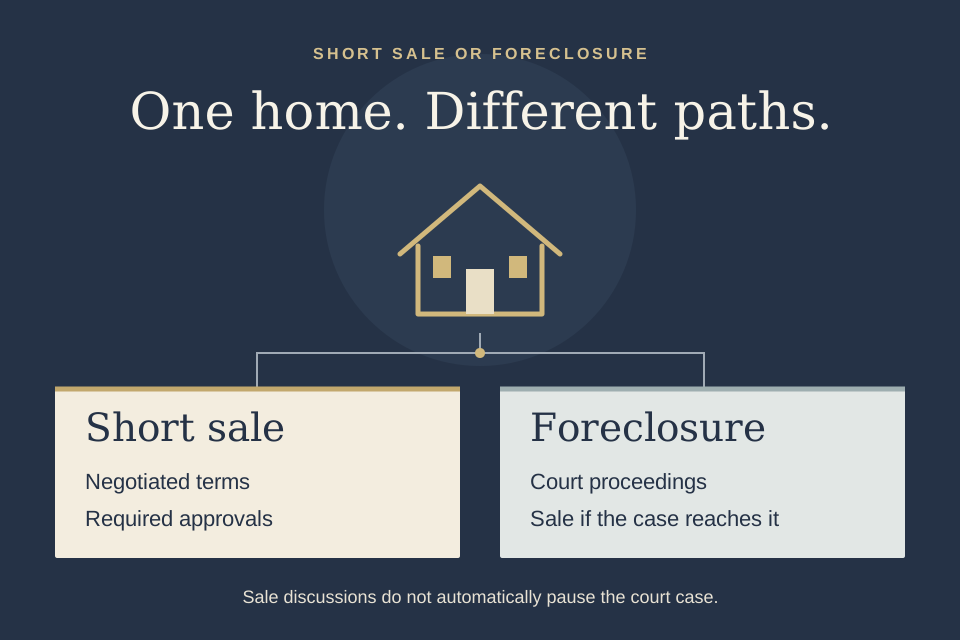
What is the difference between a short sale and foreclosure?
In a short sale, the homeowner pursues a negotiated sale subject to the necessary approvals. In a foreclosure, the lender seeks to enforce the mortgage through a legal process. Florida mortgage foreclosures generally go through the courts.
Neither label alone tells you what happens to an unpaid balance. The CFPB’s short-sale overview explains why approval and remaining-debt terms matter.
| Question | Short sale | Foreclosure |
|---|---|---|
| How is the property sold? | A negotiated sale with required creditor approvals. | A court-supervised foreclosure sale if the case reaches that stage. |
| Can you choose the buyer? | You can pursue an offer, subject to approvals and closing requirements. | You do not choose the winning auction bidder. |
| Who controls timing? | Approval and closing requirements matter; the court case can continue. | The court’s orders and applicable procedures control the sale timeline. |
| Is remaining debt automatically forgiven? | No. Review the written approval and releases. | No. Do not assume a sale erases every remaining obligation. |
| Do sale discussions pause the lawsuit? | Not automatically. | Proceedings continue unless an applicable protection, agreement, or court action changes them. |
Before choosing a sale, consider whether keeping the home is realistic
A short sale is an option for leaving the property, not a way to keep it. If you can catch up and maintain future payments, ask whether mortgage reinstatement or another retention option is available.
The goal should fit your finances and circumstances—not simply avoid an auction at any cost.
Do you actually need a short sale?
Being in foreclosure does not necessarily mean you owe more than the home can sell for. Compare a realistic sale price, less closing costs and other obligations, with the mortgage payoff and other liens.
A traditional sale may be possible if the proceeds are sufficient. Our selling a house during foreclosure guide explains how the sale and pending case must work together.
The short sale process in Florida: approvals and documents
Ask the servicer for its requirements. A review may involve financial and hardship information, a purchase contract, and an estimate of the net proceeds. The required documents and decision-makers depend on the loan and transaction.
- Identify every creditor whose approval or release is needed.
- Confirm that the submission is complete.
- Understand the acceptable price and net proceeds.
- Resolve other liens and title requirements.
- Check which closing expenses are permitted.
- Note the approval’s expiration date and conditions.
- Ask what happens if the price, buyer, or closing date changes.
A signed purchase contract is not lender approval, and one lienholder’s approval may not resolve all the others. Keep copies of submissions and written decisions.
How long does a short sale take?
The process can take months rather than weeks, but there is no dependable timeline for every transaction. Finding a buyer, assembling a complete submission, obtaining approvals, clearing title, and closing are different steps.
Complete submission
Confirm what is required and whether it has been received.
Written approvals
Check the conditions and expiration dates for each approval.
Title and closing
Complete the sale within both the approval terms and the court timeline.
Ask which stage you are in and what could prevent the next step. A pending foreclosure has a separate schedule; an estimated short-sale review period does not extend it.
Can a short sale proceed while a foreclosure is pending?
It may be possible, but the two processes need coordination. Listing the home, receiving an offer, or entering short-sale review does not automatically stop a hearing or auction.
Applicable servicing protections, an agreement, or court relief may affect what can happen, depending on the facts. If a sale date is approaching, have that date and the proposed transaction reviewed promptly. Do not rely only on the fact that a review is underway. See our guide to stopping foreclosure in Florida.
Resolve the remaining-balance question in writing
Releasing a lien so a sale can close is not necessarily the same as forgiving all unpaid debt. Review whether the approval releases the mortgage, forgives the shortfall, or preserves a right to collect it.
A written agreement not to pursue the remaining shortfall is sometimes called a deficiency waiver. Do not assume the approval includes one. The CFPB’s foreclosure-avoidance information highlights the importance of understanding debt-forgiveness terms.
This is a question to resolve before closing. Ask a qualified tax professional about potential tax consequences as well.
Is a short sale always better than foreclosure?
No single answer fits everyone. Consider whether keeping the home is sustainable, available equity, the time left, the approval and release terms, and the costs of moving or other obligations.
If you want to keep the home, review loan modification during foreclosure as a separate possibility. Neither a modification nor a short sale is guaranteed. Avoid promises of a particular credit-score result or a fixed timetable for borrowing again.
How the firm can help with a short sale
Anthony Rumore, P.A. can help evaluate the proposed sale alongside the foreclosure, review approval terms, communicate with the lender, and coordinate with the title company. The firm’s experience includes hundreds of short sales.
Bring the court papers, recent mortgage statements, any offer or approval, and the sale notice if one has been issued. A planned closing does not remove the need to address court deadlines.
Find foreclosure information for your Florida county →
Sources and important context
Published October 19, 2026. General educational information, not legal or tax advice. Coverage, deadlines, and available options depend on the loan documents and case history. Contacting the firm or sending a request to a servicer does not create an attorney-client relationship or itself suspend court proceedings. No outcome is guaranteed.