
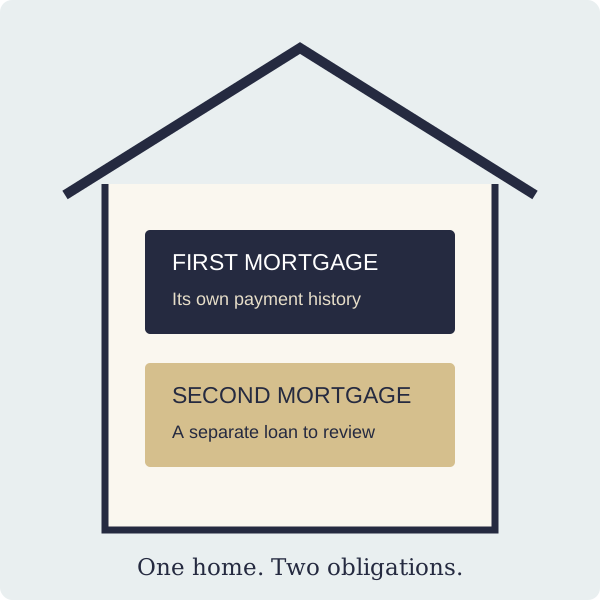
What is a zombie second mortgage?
A “zombie mortgage” is an informal name for a mortgage debt that appears to return after a long period without collection activity. The homeowner may have believed it was resolved, while a lender, servicer, or debt buyer still claims an enforceable obligation. The term itself does not establish whether the debt or lien is valid.
These disputes can involve a second loan taken out when the home was purchased or a later home equity loan or HELOC. The CFPB describes how dormant second mortgages can resurface with foreclosure demands.
Can a second mortgage foreclose if the first mortgage is current?
Potentially, yes. Making payments on the first loan does not by itself cure a default on a separate second mortgage. Each obligation needs to be identified and reviewed. “Second” describes the mortgage’s position; it does not mean the holder must ignore a default until the first lender forecloses.
Start with both account numbers, the notes and mortgages, and the most recent information for each servicer. If you modified the first mortgage, bring that agreement too. Do not assume a modification of one loan also resolved the other.
Does a charge-off or years of silence erase the mortgage?
A charge-off is not, by itself, proof that the lien was released. Missing statements and a debt’s treatment on a credit report also do not settle that question. Look for the actual settlement, satisfaction, release, or court order rather than relying on a recollection of a phone conversation.
If someone said the loan was forgiven, gather the letter and the agreement it refers to. An attorney can compare those documents with the demand and recorded mortgage. Keep envelopes and dates as well as the notices themselves.
What if the second mortgage was included in bankruptcy?
Discharge of personal liability and removal of a lien are different issues. The federal courts explain that a valid lien that was not avoided in bankruptcy may remain after discharge. Bring the discharge order, any plan, and orders specifically addressing the mortgage. Simply listing the debt in a bankruptcy case does not establish that the lien was eliminated. U.S. Courts: discharge and liens.
What should a Florida foreclosure attorney review?
Identify the note, mortgage, account, and claimed right to enforce it.
Collect payments, settlements, bankruptcy orders, and earlier court filings.
Compare the balance, charges, notices, and current deadlines.
- Who is pursuing the claim? Compare the plaintiff or collector with the loan and transfer records. Ownership and the right to enforce require careful review.
- What amount is being claimed? Ask how principal, interest, payments, fees, and credits produced the balance.
- What happened before this demand? Earlier agreements, dismissals, releases, and bankruptcy orders may matter.
- Were required notices and procedures followed? The applicable requirements depend on the documents and facts.
- What needs a response now? A collection letter, summons, motion, and sale notice are different documents with different consequences.
Read about common Florida foreclosure defense issues and disputing mortgage servicing errors. Written-request procedures have coverage limits; do not assume every rule applies to every second mortgage or HELOC.
Is there a statute of limitations on a zombie mortgage in Florida?
Florida’s statute generally provides five years for an action to foreclose a mortgage. That does not mean every loan with a missed payment more than five years ago is automatically unenforceable. Installment defaults, acceleration, maturity, earlier lawsuits, and the relief being sought can affect the analysis.
Have counsel review the complete chronology before relying on age as a defense or signing an acknowledgment, settlement, or new payment agreement. The starting point is Florida Statutes §95.11; the statute alone does not decide your case.
What should you do when an old mortgage demand arrives?
- Keep the demand, envelope, and every attachment. Note when you received them.
- Locate both mortgage files and any settlement, modification, or bankruptcy records.
- Verify the sender through an independent, reliable contact channel before providing money or sensitive documents.
- If you have been sued, arrange a review of the full court packet promptly. Use the foreclosure complaint and summons guide to organize what arrived.
- Compare a defense with any proposed resolution before committing. A settlement needs to address what happens to the debt, lien, and pending case.
Common questions about old second mortgages
Can an old HELOC lead to foreclosure?
A HELOC secured by the home can present foreclosure risk if an enforceable default exists. The credit agreement, mortgage, maturity date, and account history need review; an old account is not automatically a canceled lien.
Should I ignore a demand if the loan no longer appears on my credit report?
No. Credit reporting and lien enforceability are separate questions. Preserve the demand and have the loan records checked, particularly if court papers or a sale notice have arrived.
Does disputing the debt stop a Florida foreclosure lawsuit?
Do not assume so. A dispute or request for records does not substitute for a court response or establish that a hearing or sale has been canceled.
An old loan has resurfaced. Review it before deciding.
For a free consultation about a pending or threatened Florida mortgage foreclosure, call Anthony Rumore, P.A. at 888-318-4550. Bring the new demand and whatever you still have from the original loan. If you have a hearing or sale date, mention it when you call.
Find your Florida county’s resources or use the consultation checklist.
Sources and context
Sources checked November 14, 2026. General educational information, not legal advice. Options depend on the documents, facts, and applicable law. No outcome is guaranteed. Contacting the firm does not create an attorney-client relationship or stop a foreclosure.